
Tell Thurston County: Delay Implementation of the Home Energy Score Mandate
Thurston County Is Facing a Budget Crisis. Is Now Really the Time for a New Mandate?
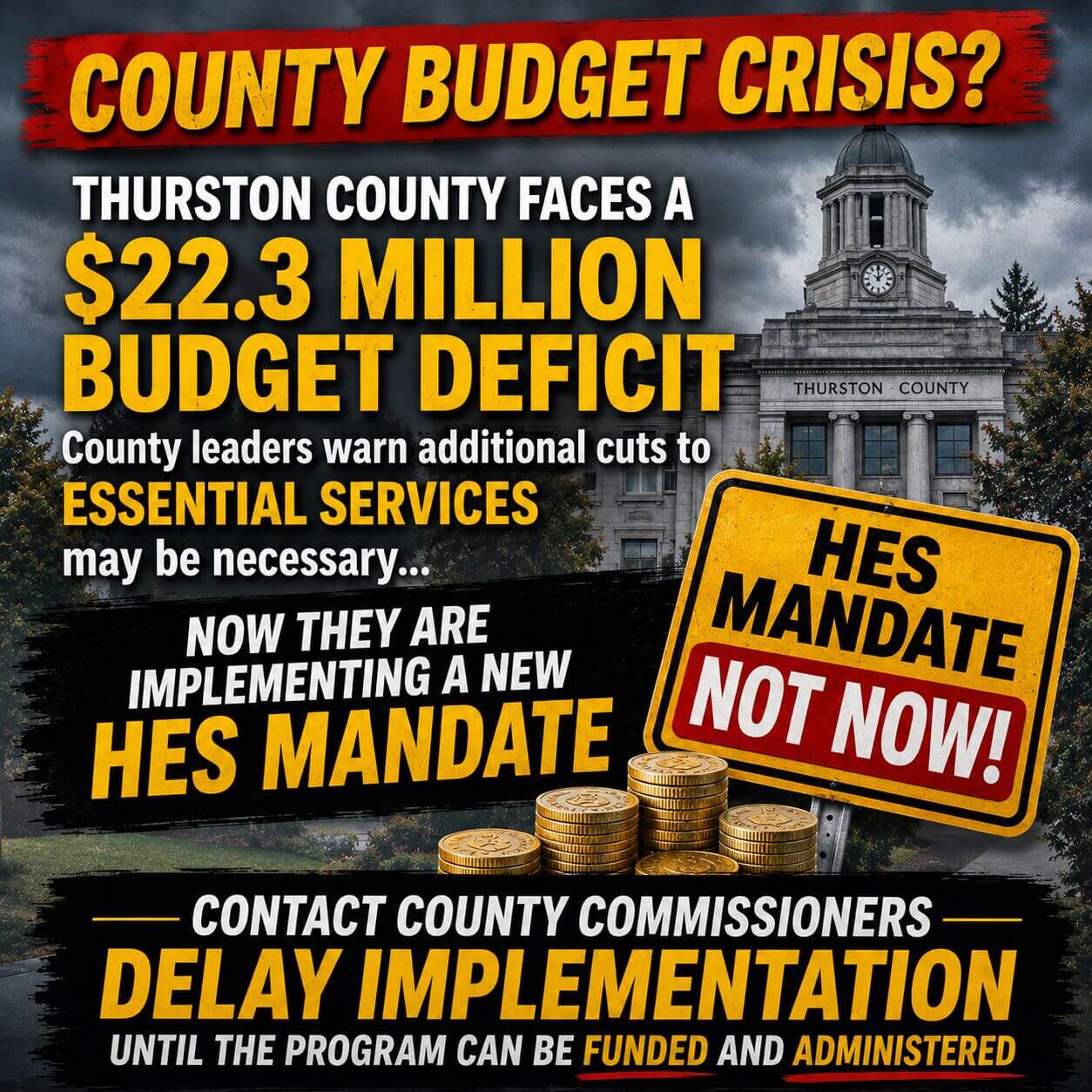
Thurston County is facing a projected $22.3 million budget deficit in 2027. County leaders have publicly discussed the possibility of additional reductions to essential services as they work to close the gap.
At the same time, the County is moving forward with implementation of a new Home Energy Score (HES) mandate.
The Thurston County REALTORS® Association believes implementation should be delayed until the County can demonstrate how the program will be funded, administered, monitored, and enforced without further straining limited public resources.
Take Action Today
Tell the Thurston County Board of Commissioners:
Delay implementation of the Home Energy Score ordinance until the County can demonstrate how the program will be funded, administered, monitored, and enforced.
The County should focus on maintaining essential services before implementing new mandates.
What is the Home Energy Score Ordinance?
The Home Energy Score ordinance requires many homeowners to obtain a Home Energy Score assessment before publicly listing their home for sale.
The stated goal is to provide information about a home's energy efficiency. While we support consumer education and energy awareness, we believe significant questions remain regarding the implementation and administration of the program.
Why Are We Concerned?
1. Thurston County Is Facing Significant Budget Challenges
Recent reports indicate the County faces a projected $22.3 million budget deficit and may be forced to make difficult decisions regarding essential services.
Before implementing a new regulatory program, the County should clearly identify:
- How the program will be funded
- Who will administer it
- How compliance will be monitored
- How enforcement will occur
- What the long-term costs will be
2. The Subsidy Program Is Severely Underfunded
The County has budgeted approximately $4,000 annually for homeowner subsidies.
At an estimated cost of $250 per Home Energy Score assessment, that funding would provide assistance to approximately 16 homeowners.
Yet approximately 961 annual home listings in unincorporated Thurston County could be subject to the ordinance.
That means the current subsidy allocation would assist only about 1.7% of affected homeowners.
3. Major Questions About Compliance and Enforcement Remain Unanswered
Throughout this process, TCRA has repeatedly asked:
- How will compliance be monitored?
- How will violations be identified?
- Who is responsible for enforcement?
- How will the County ensure all sellers are treated equally?
- What resources will be required to administer the program?
To date, many of these questions remain unanswered.
4. There Is a Better Alternative
TCRA supports energy efficiency and consumer education.
Rather than implementing a new mandate, we have proposed a voluntary approach focused on:
- Education
- Consumer awareness
- Incentives
- Energy improvement resources
This approach could encourage energy-conscious decision-making without creating additional regulatory burdens for homeowners.
5. Much of the Claimed Benefit Is Based on Projections
Many of the claims regarding the effectiveness of Home Energy Score programs rely on modeling, projections, and assumed behavioral outcomes.
A voluntary program would allow Thurston County to gather local data and measure real-world results before imposing a countywide mandate.